Meal Preparation for Elderly Made Easier
A favorite bowl of oatmeal, eggs cooked the familiar way, soup warmed for lunch - these small routines can make home feel steady and comforting. For many older adults, though, getting a meal from the refrigerator to the table can become difficult long before they are ready to give up living independently. Thoughtful meal preparation for elderly loved ones can protect energy, support regular eating, and make each day feel more manageable.
The goal is not to turn every meal into a complicated nutrition project. It is to make good food easier to enjoy while respecting personal tastes, abilities, and routines. For families in Pinellas County, a simple plan can also ease the worry of wondering whether a parent, spouse, or recovering loved one has eaten well today.
Start With the Person, Not the Menu
A helpful meal plan begins with listening. An older adult may have strong preferences about breakfast, cultural favorites, food textures, portion sizes, and when they like to eat. Someone who has always had coffee and toast at 7 a.m. may not welcome a sudden switch to smoothies and egg-white wraps, even if the new meal sounds healthier on paper.
Ask what foods are easy to eat, what foods have stopped sounding appealing, and what times of day hunger is strongest. Pay attention to practical concerns, too. Arthritis may make opening jars painful. Poor vision can make reading labels hard. Fatigue after a hospital stay may leave someone unable to stand at the stove for long. A person with memory changes may forget that food is in the refrigerator or lose track of whether they have eaten.
Medical needs also shape the plan. Diabetes, heart conditions, kidney disease, swallowing concerns, food allergies, and medication instructions can affect what and when a person should eat. A physician, registered dietitian, or other qualified medical professional should guide dietary restrictions. Non-medical home care can help carry out a family's chosen meal routine, but it does not replace clinical nutrition advice.
Build Meals Around Familiar, Nourishing Foods
Many seniors eat less when meals are too large, too bland, or unfamiliar. Smaller portions served regularly can be more inviting than one heavy plate. Aim for meals that include a source of protein, a fruit or vegetable, and a satisfying carbohydrate or grain, based on the person's dietary guidance.
For example, breakfast might be scrambled eggs with toast and fruit. Lunch could be a turkey sandwich, vegetable soup, or a baked potato topped with beans or shredded chicken. Dinner may be baked fish, roasted vegetables, and rice, or a familiar pasta dish with a side salad. Soft, easy-to-chew options such as yogurt, oatmeal, cottage cheese, soups, stews, and cooked vegetables can be especially useful when chewing feels difficult.
Hydration deserves a place in the routine as well. Older adults may not feel thirsty even when they need fluids. Keeping water, decaffeinated tea, milk, or other approved beverages within reach can encourage regular sipping. If fluid intake is restricted for medical reasons, follow the clinician's instructions closely.
Make Meal Preparation for Elderly Adults Safer
The kitchen can present real risks when mobility, strength, eyesight, or memory changes. The safest solution depends on the individual. Some people only need ingredients washed and set out. Others benefit from having meals fully prepared, portioned, and reheated with support.
A few practical adjustments can reduce stress:
Keep frequently used foods, plates, and utensils on easy-to-reach shelves.
Choose lightweight cookware and easy-grip utensils when hand strength is limited.
Label prepared meals with the date and simple reheating instructions.
Clear counters of clutter and clean spills quickly to lower fall risks.
Check refrigerator temperatures and discard foods that have been stored too long.
Prepared food should be cooled and refrigerated promptly, then reheated thoroughly when served. When there is confusion about appliance use, leaving the stove on, or recognizing spoiled food, it may be safer to limit unsupervised cooking. Microwave-ready portions, no-cook lunches, and caregiver-prepared meals can preserve choice without adding unnecessary risk.
Plan Once, Then Let the Week Feel Lighter
A weekly plan can prevent the daily question of “What is there to eat?” It does not need to be rigid. Choose a few breakfasts, lunches, dinners, and snacks the person enjoys, then shop with those meals in mind. Repeating favorites is often a strength, not a failure. Familiar foods are easier to prepare, easier to keep on hand, and more likely to be eaten.
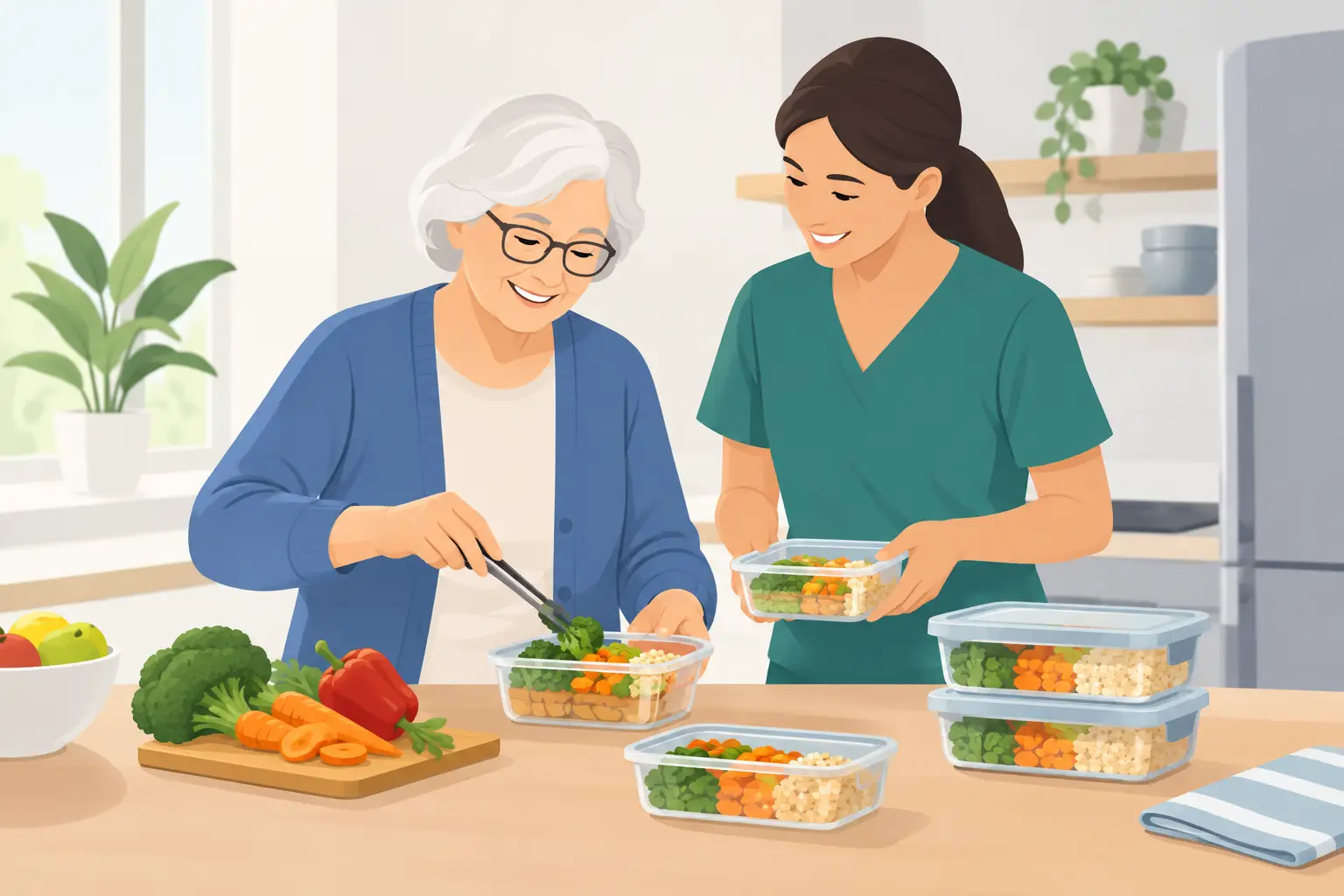
Consider preparing ingredients in batches when energy is highest. Wash berries, portion crackers, slice vegetables, cook a pot of soup, or divide leftovers into single-meal containers. Freezing extra portions can provide a dependable backup for days when a loved one is tired, unwell, or unable to shop.
Still, flexibility matters. Appetite can change from day to day, especially during recovery. Keeping simple alternatives available - such as soup, yogurt, bananas, eggs, or a sandwich - helps ensure there is something appealing without forcing a full meal.
Notice When Eating Has Become a Concern
A skipped meal now and then is not always an emergency. But ongoing changes deserve attention. Families should take note if a loved one is losing weight without trying, eating very little, avoiding foods because chewing hurts, appearing weak or dizzy, or leaving spoiled food untouched in the refrigerator.
Other signs can be less obvious: unopened groceries, stacks of takeout containers, burnt pans, repeated comments that food “doesn't taste right,” or a once-tidy kitchen that has become difficult to manage. These changes may reflect a health issue, loneliness, medication side effects, limited mobility, or trouble completing daily tasks.
Share concerns with the person's health care provider, particularly when there is sudden appetite loss, trouble swallowing, dehydration, or a significant change in weight. Families do not have to diagnose the cause before asking for help.
The Value of Company at Mealtime
Meal support is about more than chopping vegetables and washing dishes. Eating alone can make food feel like another chore, particularly after the loss of a spouse, during illness, or when getting out is harder than it used to be. A warm conversation while lunch is prepared or a companion sitting nearby during a meal can make the experience more pleasant.
That companionship also creates a natural opportunity to notice changes. A caring helper may see that a client is no longer interested in a favorite meal, is having trouble opening containers, or needs groceries before the pantry is empty. Small observations can help families respond early rather than waiting for a problem to grow.
GeoJas Home Care Agency can provide personalized, non-medical support with grocery shopping, light meal preparation, kitchen cleanup, errands, and companionship. Through a free in-home visit, our caring team can learn what routines matter most and help families create a heart-centered care plan that fits the person's daily life.
Give Yourself Permission to Accept Help
Family caregivers often try to handle every grocery run, meal, phone call, and cleanup task themselves. That care comes from love, but it can become exhausting when balanced with work, children, distance, or a loved one's changing needs. Bringing in dependable help for a few visits each week can give the older adult more consistency and give the family more breathing room.
The best meal routine is one a person can follow safely and enjoy with dignity. Whether that means setting out breakfast, preparing a few favorite dinners, or sharing lunch with a friendly companion, reliable support can help home remain a place of comfort - and a place where a good meal is still part of the day.
Comments